Rachel Thompson

Showing posts with label Guest Post. Show all posts

Friday, December 6, 2013

Tom Skinner – Budgie The Helicopter > Celebrity children’s authors @PictureBookTom

Budgie The Helicopter > Celebrity children’s authors
by Tom Skinner
SUPER SAGE
It is advantageous to an author that his book should be attacked as well as praised. Fame is a shuttlecock. If it be struck only at one end of the room, it will soon fall to the ground. To keep it up, it must be struck at both ends. (Samuel Johnson)
FAB FIVE
Big fan base (Madonna, Seinfeld) = big sales + massive publicity.
Unfair advantage? Clear path to glory?
Is publication more to do with celebrity than writing talent?
Maybe celebrity revenue funds new writing talent?
Do parents buy for themselves or for their children?
TIME FOR THE GURU
Become a movie star, politician, TV anchor, popstar or comic.
CLICK ME
A whirlybird hero from the Duchess of York
ABC
This whimsical mini-monster mash is a solid early reader’s alphabet lesson cleverly disguised as goofy lighthearted wordplay.
That’s exactly why ABC: A Mini Monster Alphabet Book for Young and Old is chock full of adorable (not scary!) mini monsters with a love for sophisticated, funny, and odd-sounding names.
Kids will enjoy reading along as the narrator of the bonus audio recites Arty names, Bold names, Cute names, Daft names, and 22 other name categories — with each category and its related list of vocabulary word names linked to an individual letter of the alphabet.
Buy Now @ Amazon


Genre – Children’s Picture Book
Rating – G
More details about the author
Connect with Tom Skinner on Twitter & Goodreads
 
Quality Reads UK Book Club Disclosure: Author interview / guest post has been submitted by the author and previously used on other sites.


Sunday, December 1, 2013

A. M. Griffin – How to Find a Critique Buddy @AMGriffinbooks #LovingDangerously

How to Find a Critique Buddy

Ladies Who Critique

The MudPuddle from RWA-FFP

Both were wonderful starting grounds. On Ladies Who Critique, which was a free service, I found all members under my genre and friended them. Heck I didn’t know what else to do.

In order to join The Mudpuddle group you have to first become a member of RWA (charge), then you have to join FFP (charge) and from there you can request to join The MudPuddle crit group (free).

So first off, I put a few chapters up on The MudPuddle and yes, you guessed it, it was torn to shreds. I have to mention here that a lot of the comments were those that I needed to hear. Some of the comments mentioned mistakes and questions that my editor had already pointed out but I was too stubborn to change. So, although my feelings were terribly hurt from that experience, I can honestly say that because of it I have a better book.

One comment told me to delete the first chapter and start the book at the second chapter. This was something that I was totally against. The first chapter had vital information in it that I wanted the reader to know, such as the extent of Eva and Allysan’s relationship. But as I thought about it more I decided to take his advice and do away with it. In the end you will see that Eva and Allysan’s relationship is weaved throughout the story and you are actually spared from the first chapter info dump. You can all thank Ed for that.

After working with The MudPuddle for a couple of months, my massive friending spree over at Ladies Who Critique finally paid off. Two lovely gals contacted me, Stephy and Terri. We communicated back and forth for about a week deciding on how we should pursue with crit’s, what format to use and what would be fair to all parties.

Now this small crit group of unpublished aspiring authors is where I really learned the most. I went in it with an open mind, as you should when joining a crit group. I figured that I had to view these ladies as potential customers. I didn’t get offended or annoyed if either came back with “Sa’Mya seems addled brained. Is that what you are going for?” or “I don’t understand what you mean.” Or “This doesn’t make sense.?” To me those were valid comments and questions. If a reader is asking the question that means I’ve missed the mark somewhere. I didn’t fire back an email that said, “What, yes it does! I explained it in chapter 2!” Why? Because if I had explained it thoroughly in chapter 2, then the question would not have been asked. So, instead I would go back to chapter 2 and expand where needed.

In return, I offered the same services to them. I wouldn’t read their work, trying to nitpick through every word or sentence, trying to find mistakes or errors. I would simply read as a reader would. If a sentence or two needed help then I would offer a solution. If a scene could use a little more “umph”, I would offer advice.

I’m happy to report that one of my crit partners went on to start her own publishing company (Troll River) and the other signed with her and has a very successful science fiction series (Patricia Knight)

As always (from the sayings of a good crit partner), “take what you can use and discard the rest!”

Dangerously Hers

Buy Now @ Amazon

Genre - Science fiction

Rating – R

More details about the author

Connect with A.M. Griffin on Twitter

a Rafflecopter giveaway

Friday, November 29, 2013

JD Wylde – How To Avoid The Rejection Blues

How To Avoid The Rejection Blues

by JD Wylde

No one likes to be rejected. Deep down inside I think each one of us has the desire to be accepted. To be liked. Even praised.

It’s the same for our writing.

We start with an idea. We nurture it into a story. We work tirelessly for months, maybe years creating what we think is a great angle, a unique twist, and we perfect it until it’s the very best we can make it. Then we send it off with all our hopes and dreams tied up in a pretty bow on top of it. And we eagerly wait to hear those special words. I love it! It’s exactly what I’m looking for. Why aren’t you already published? Let me be the first to offer you a five-book contract.

Some do hear those words.

Some of us don’t.

We told although our story is good, it’s not great. What we thought was a unique twist, was already done. Or the real heartbreaker, we’re told that they love our story, but there’s no place to fit it into their current lines. Or, another heartbreaker, they don’t have room to take on a new author. Or we get the photocopied rejection letter with our name scribbled across the top. (I’ve gotten one of those.) Or the rejection letter with someone else’s name typed on it. (I’ve gotten one of those, too.)

Or the enthusiastic request for a partial submission with no response back. Ever.

It’s not fun.

So what do we do about it?

Chocolate’s a good idea. I keep an emergency kit in the refrigerator for just that reason. Hershey has never rejected J.D. Wylde. (Although to be perfectly honest, I don’t really need any reason to indulge in chocolate.) Ice cream works, too. A large spoon and a quart of Double Dutch Chocolate is a good elixir for rejection.

I’ve been told alcohol works, too. Personally I have enough other vices, so I haven’t tried this one, but I’m told a little Gentleman Jack goes a long way toward soothing pain. And smoothly, too. Captain Morgan, Jim Bean, Johnny Walker. These men don’t reject!

But seriously, allow yourself the time to feel bad. Come on! This is your dream that’s been trampled on. Your ego is bruised. You really thought you had a winner this time. Allow yourself time to mourn, to rage, to pout, but then set that letter or email aside.

You’re a writer.

One rejection letter, or a hundred, is not going to stop you. I have received enough of them over the years, I think, to possibly paper a wall in my bathroom.

Salve your ego. Dust yourself off, and try again.

Come up with a new idea. Another story line. Take an on-line class. Beef up your characters, your plot, your sagging middle (and not the one from eating too much ice cream). Just don’t give up.

Keep trying.

Keep writing.

Author Bio

J.D. Wylde is the author of four books currently published. (WHEN PUSH COMES TO SHOVE, THE JOURNEY, KARMA IN CAMO, and BLISS.)  She has been married for thirty-four years to her very own superhero, and together, they have three handsome sons, one beautiful daughter-in-law, and a very crazy Cairn Terrier.  She’s busy at work on two new releases coming soon. (WHEN LAW MET DISORDER and THE DREAM.)

You can visit J.D. at her website, www.jdwylde.com, her fan page on Facebook (J.D. Wylde) and Twitter (@jdwylde).

9781484912140_p0_v1_s260x420

Five authors contribute five novellas to this romantic collection set over centuries, in one home on the Albemarle Sound.

Home is where the heart is…

One stately residence on North Carolina’s Albemarle Sound. Five stories of heart-warming romance. Told against the backdrop of the Civil War, the loss of an unsinkable ship, the patriotic zeal of the second world war, the heart-rending conflict of Vietnam, and the thrill of modern day Nascar, Jamie Denton, S. K. McClafferty, Kathleen Shoop, Marcy Waldenville, and J. D. Wylde deliver a variety pack of poignant, sexy, and sweet.

Buy Now @ Amazon

Genre – Romance

Rating – R

Connect with the authors on Facebook

Wednesday, November 20, 2013

Emily Kinney – Why Book Covers are So Important @theshadylady

Ah, book covers! This, with little exaggeration, is one of my favorite literary topics. In addition, it is also a topic that is rarely conversed about or studied. Growing up, from ages nine to twenty-one, so roughly eleven or twelve years, I volunteered weekly at my town’s public library. This became a vital portion of my advancement in literary knowledge and exposure. I learned a lot about the interworking’s of libraries; their alphabetical and numerical cataloguing systems, how to put a protective plastic jacket over the paper jacket of a hard cover, and how to arrange festive displays on large board, depending on the season or holiday. But when I wasn’t being trained, I had the time to wander about on my own and observe my surroundings with the pervading sense of curiosity that has beleaguered me since birth.

I saw, wondered, and contemplated about the books that surrounded me. Shelf after shelf, bindings out to greet the perusing reader, none looking exactly alike, all flaunting their fonts and colors like so many male critters trying to attract a mate. Naturally, I would choose to take down and look at the books whose bindings had quirked my interest the most. The binding is the precursor to the actual book cover. Like the opening act before the legitimate, established, and high selling rock stars take the stage. They are constructed to entice unsuspecting eyes, to draw you in, give you a taste before you allow your hand to hover closer to remove and inspect the book itself. How can you not adore book bindings? They are given so little credit, and I suspect they always will. No one congratulates the sleeve of a cashmere cardigan for seducing a shopper into looking at the whole garment. Poor book bindings. Let this post be a mark in history where the credit you are due was given.

And once the binding had hypnotized me into pulling the entire book off the shelf, I was always met with the cover. Though it is little discussed, it can be easily agreed upon that book covers provide a psychological catalyst between the reader and the pages. Depending on the content, topic, themes, setting, direction, style, and intent of the story in the book, the cover can respond a number of ways. It can keep most everything a mystery, thereby not exploiting the plot and keeping its integrity intact, such as with Catcher in the Rye; or all that’s needed to draw in a reader is the title or the name of the author, such with every Tom Clancy novel ever sold. Book covers that have little to offer beyond the title, author’s name, and perhaps a small image pertaining to certain events in the story have both advantages and disadvantages. If you are careful and wise, it can evoke an irresistible sense of curiosity. Or, it can turn a person off to the possibility of reading it.

On the other hand, book covers that convey different elements, or even scenes, that a part of the story can often ignite the imagination of whoever is looking at them. However, this can often be tricky. There is the now very popular, and cheaper, act of using actual photos for the cover. It is very modern, and it doesn’t particularly sit well with me personally. Mostly, because I believe the cover should reflect the art of the writing itself. It’s all art. It can be contemporary painting, or sparse drawing, or vivid and lush illustration, but I love it when a book cover is art itself.

During my countless hours at my library, I slowly began to assess what covers made want to read the actual book and which ones didn’t. Covers are so much more than mere eye-catching advertising. It is the first step in developing a relationship between the book and the reader. Shreds of communication and understanding are shared when the reader scans the cover for the first time. Therefore, it should represent the story and style as well as it can. Many stories are timeless, but might never be read unless the cover entices the reader to turn to the first page.

The Island of Lote

Buy Now @ Amazon

Genre - Young Adult Fiction

Rating – PG

More details about the author

Connect with Emily Kinney on Facebook & Twitter


Quality Reads UK Book Club Disclosure: Author interview / guest post has been submitted by the author and previously used on other sites.

Tuesday, November 19, 2013

Beca Lewis – The Power Of Words @becalewis

The Power Of Words

© Beca Lewis 6/7/13

Sitting on the stationary bike at the gym, reading Kurt Vonnegut on my iPhone, I was suddenly, and instantly, transported through a time warp back to somewhere in the 60’s.

I was in our living room, in the house on Irvin Street, and Dad was walking with his trademark forward lean down the hallway, correcting us.  English teacher to the core, he was always correcting our speaking habits, but during this particular time-period, he was stuck on us not saying the word ain’t and using the word as instead of like.

This focus on these two words lasted for a month or two, then calmed down to normal levels, although we all walked around the house for many years saying “AS a cigarette should, not like a cigarette should” and to this day my ears perk up when I hear the word like used instead of as.

What caused the time warp?  It was Kurt’s fault!  Both the time warp, and the month of correction, I am sure of it!  After all, there it all was in his story called My Father’s Dictionary.   I conjecture that Dad read that story, and inspired our ain’t and as time.

It was an odd feeling, to be reading something so many years later that must have so profoundly moved him at the time. This insistence on the correct word has stuck with me, sometimes to my embarrassment as I correct someone without thinking.  My only consolation is that my brother and sister sometimes do the same thing. Bad habit for sure when no one has asked us to do so – however, it did begin my fascination with words, and how they so quickly create an impression.

Words, and the power they carry is immeasurable, yet we sometimes use them willy-nilly as if they have no current or future weight.  All of us, at one time or another wish we could take back something we said; or wish we said something better than we did. I am sure I owe many people an apology for words spoken without grace.

Imagine a world without words, and the opposite appears; the world, as we know it, composed by words. Cultures, families, societies, countries — all have words as their basis and common link. Words bind us together, move us to action, create tension, or bring peace.

We use words to describe, to condemn, to love, to divide, to understand.

However, it is the under lying meaning of the word that is its essence, because no word can be taken completely literally. How can it be that a word means the same thing to each of us, it’s not possible.

In order to communicate, and to understand, we have to listen to the meaning behind the word, not the actual word; otherwise, we might miss the intention of the speaker or writer.

Today, there are people using words just to hear themselves talk, or to make themselves important.  I suppose this has always been so, but now we have the media.

On the other hand, we have glorious architects of words. Writers building structures to house, walk through, or live within.  There are writers choreographing words, instead of people, to move through the rhythm of an idea to entertain, teach, and inspire.

We all might not be these kinds of word masters, but we can remember that what we say and write, once released, carry on as messengers long after we may have forgotten them.

As listeners and readers of words, understanding the intent and meaning behind the words used will go a long way in dissolving conflict and confusion, and uniting us in the desire to act for the good of all, as we should (not like we should .. right Dad?).

Living In Grace

Buy Now @ Amazon

Genre – Spirituality, Non-Fiction

Rating – G

More details about the author and the book

Connect with Beca Lewis on Facebook & Twitter

Website http://www.becalewis.com

Saturday, November 16, 2013

Adrian Powell - 10 Things I Wish I Knew About Being an Author I Didn’t Know Before@AuthorAdrian

10 Things I Wish I Knew About Being an Author I Didn’t Know Before
Clicking the publish button on Amazon’s Kindle publisher was one of the most exciting experiences of my life not to mention one of the most nerve racking. From the moment I received the coveted “your title is ready for purchase” email I knew that it was the beginning of a long process filled with several professional and personal highs and lows. At that very moment I was not only agreeing to the terms of service set forth by Amazon but opening my work to ridicule, praise, critiques, and if I’m extremely lucky potential rewards all for the sake of sharing my imagination to the world.
Self-publishing a book is nothing short of a major risk but the bigger the risk the bigger the reward at least that is how the saying goes. As with anything, educating yourself on the industry you are entering can save you time and money both of which you can never have enough of. Although I read extensively about self-publishing a year and a half before I actually published my first book there are some things I wish I knew about being an author that I didn’t know before.
1.) Writing requires discipline – I had the perfect scenario for writing my first novel. I would sit down every day write about 4,000 words in order to have it completed in about 30 days. Then reality hit me, with a full time job, working on my Master’s degree, and somewhat of a social life it became more and more difficult to reach my writing goal without seriously setting aside time to write. Writing may come natural to some but even the most talented writer needs time set aside to focus solely on writing.
2.) Mistakes cost – The cost that I am referring to is not primarily monetary. As an author time is your greatest asset. Readers are now accustomed, thanks in part to technology, to receiving information fairly quickly. Because of that one mistake my delay printing for days or the availability of your book for download for hours. Readers are then forced to move on to the next book. If at all possible reduce the amount of errors prior to submitting the final product.
3.) Writing is addictive – while writing my children’s book I quickly found out how addictive writing really is. I instantly got several concepts of other stories and wanted to begin those projects immediately. This leads to the next point.
4.) Writing takes focus – In order to ensure you are channeling all of your creative energy focus on one story at a time. Am I saying don’t work on two books at one time? No but focus solely on one book and if you get writers block move on to the next.
5.) You have to make people support you – Okay you’ve finally written the novel, short story, novella, etc. You’re excited, thrilled, and proud. Unfortunately those feelings don’t transfer to other people. You have to let them know how exciting you are and how great your story is. Your enthusiasm will transfer over to them as curiosity and excitement which is the first step in acquiring a new reader.
6.) Timing isn’t everything, IT’S THE ONLY THING – Launching a book themed around Christmas during the summer may not be a good idea. Ensure your deadlines are aligned with what is currently happening in the world. You may have an advantage to waiting a couple weeks to debut your new novel.
7.) It okay to not be perfect –Even if you have the best editor and proofreader on the market there will still be mistakes in your book. That’s okay. Nothing on this planet is perfect including you. Don’t get bent out of shape if an error is brought to your attention. Correct it and move on.
8.) Trust yourself when all men doubt you – People often are unable to see what they themselves cannot become. Don’t allow someone else to dictate or plant seeds of doubt in your head. Always go through with what you believe to be a good idea.
9.) Market a lot- Research shows that people make a purchase after the 7th time they have seen an ad. One mention on twitter isn’t going to be enough to get readers to believe in you.
10.) Have fun! – Writing should above all else be fun. It’s the one thing in this world you have complete control over. You are able to create whoever you want, they’re able to live wherever you want them to and they can be whatever your heart desires. From a superhero to a single mother you have the power to entertain someone so get
Up, Up, in the Air
Buy Now @ Amazon
Genre - Children’s Book, YA
Rating – G
More details about the author and the book
Connect with Adrian Powell on Facebook & Twitter


Thursday, November 14, 2013

The First Three Questions Every Author Gets. (And That I Have Trouble Answering ) by Brad Cotton @BradCott0n

The First Three Questions Every Author Gets. (And That I Have Trouble Answering )

If and when during conversation it should come up that I write novels, any one of, and sometimes all of, three fundamental questions invariably follow. They seem like simple questions, and it would therefore be assumed that they should beget simple answers. The answers to these seemingly common requests actually cause more trouble for me than I would otherwise like to let on.

I’m going to now attempt to answer these questions as best I can, just for you. My latest work of fiction is called BOUNDLESS (available on Amazon now), so I’m going to answer them in relation to that book. Hope you enjoy.

Question 1:

How long did it take you to write the book?

One of my favorite books on the craft is On Writing, by Stephen King. I’m not a horror/thriller reader, but you would be hard-pressed to find a better book on the subject of writing than this one. In this book, Mr. King suggests that an author should write a minimum of 1000 a day.

I do not subscribe to this decree.

I wrote BOUNDLESS over the span of about 10 months. I wrote voraciously for two months, but then I took a break. I didn’t sit back down to continue for several weeks. When I did, I wrote for about two months more and then I took another break. The next time I sat down to write, months later, I had the rest of the story mapped out in my mind. I wrote again until the first draft was complete.

After a several read-throughs, tweaks, and moments of self-hatred, I was prepared to have others read my manuscript. First, my wife read it and added her two cents. Then, I searched out and found a local editor and shelled out a few bucks to have it professionally edited. By the time I felt the manuscript was ready, a year and a half had passed by since I wrote the first word.

It takes time to write, of course it does; but it also takes time to polish. If you are a first-timer looking for a book deal, be sure your first 10 pages so polished that you can see your reflection in them. Take all the time you need.

Question 2:

Is it hard to get a book published?

This is an excellent question asked by interesting and curious people. My answer: Very much yes, and just a little bit no. Allow me to explain…

For my first book, A Work in Progress, I selected publishers that best suited my writing, my perspective, and my style. Believe it or not, I actually had a feeling about the publisher that eventually signed me based on their website copy. It was irreverent, playful, and somewhat sarcastic – I loved it. After I found this particular publisher I went out and bought a few of their books and read them. I was sure to mention in my query all the similarities between those books and mine. Unless you’re a millionaire, celebrity, or someone from reality TV (yes, there is a difference), getting published for the first time is a real slog.

For BOUNDLESS I took a different tack. I decided to leave my publisher and self-publish instead. Why, you might ask? Several reasons. I wanted to try it, to learn about it, to understand the industry better. For A Work in Progress, I just handed over my manuscript and waited for ARCs to arrive in the mail. This time around, everything was different. However, my answer to the above question remains the same. Self-publishing, like traditional, is mostly difficult, but sometimes not. If you are willing to listen, learn, put in a ton of time, and yes, make mistakes along the way, then in this era of Internet omnipotence, anyone can self-publish a book. Should they? Lord no. Can they? Yes.

There are so many online resources, forums, communities, and sites dedicated to walking you through each step. I utilized these tools myself. But I will say, with the utmost sincerity, the most helpful resource I found during my publishing journey was other authors. The stigma to self-publishing is gone. Reach out to self published authors and they will respond. Have a question about traditional or self-publishing? I’m all ears: brad@bradcotton.com

Question 3:

What is your book about?

This question makes me want to run and hide in a box. It’s not a bad question, and if I wrote about vampires or Transformers or perverted billionaires it might be one to which I could easily respond. That’s not to say that BOUNDLESS is so much more intricate than the topics mentioned above, but only that it deals instead with the real life situations and trials of characters that (hopefully) feel like real people. I therefore find it overtly difficult to describe the book without being too vague, or alternatively, giving it all away!

Here are a few of my stock answers:

Answer 1: It’s about a road trip

Answer 2: It’s about starting life from scratch

Answer 3: It’s about money, gambling, travel, lies, secrets, sex, death, God, self-discovery, friendship, love, romance, and whether or not you can escape your true nature.

Answer 4: …It’s hard to describe. (This, you will agree, is the worst response of them all.)

A Better Answer: BOUNDLESS is partly a road trip story, but it is also about what happens when the road trip ends. Can you pick up, take off, and start life over again? Can you become someone new or will your true self break through? Best friends Duncan and Ray leave Phoenix and head east. They eventually land in Boston and try to answer these questions. Along their trip they learn about each other and themselves, and about the young girl they agree to bring with them for the ride. When they finally stop and begin to lay roots, they find success, and trouble. Love, money, rivalry, and ego all play a part in what will become their new legacy — if, of course, their past doesn’t come back around and change everything.

So there you have it. If you’re a writer, you’ll recognize these three questions. If you’re a reader, I’ve just robbed you of a conversation should we one day meet. No problem, if it ever happens we can talk about you instead.

Boundless

Best friends Duncan and Ray run a successful bookie business in Phoenix. Outgrowing the life they began in college, the late twenty-something pair set out on the road with a plan to never return. Their trip takes them cross-country with eventful stops in Las Vegas, Omaha, and Niagara Falls. Along their journey they meet several colorful characters and even agree to bring a pretty young girl named Ruby along with them for the ride. Landing in Boston to run an errand for an old friend, the travelers begin to lay roots in an attempt to forge for themselves the life they’d always hoped for. Easier said than done. As romances begin to burgeon, and one of their lives is put in danger, the group quickly discovers that where they are may indeed have little effect on who they are.

Buy Now @ Amazon

Genre – Contemporary Fiction/Literary Fiction

Rating – R

More details about the author

Connect with Brad Cotton on Facebook & Twitter

Website http://www.bradcotton.com/

a Rafflecopter giveaway

Wednesday, November 13, 2013

How to Make Your Characters Believable – Johannah Reardon @JoHannahReardon

How to Make Your Characters Believable

The very first book I attempted to write was a disaster. I basically told the story as if I was writing a letter to my mother. I included lots of detail, very little dialogue, and worst of all, my tone was preachy. But I wrote it, and there was some satisfaction in that.

However, when I tried to get it published, I received rejection after rejection. Finally, one editor told me what was wrong with my writing. She said it was too wooden, was full of moralizing, and that my characters had not come alive. This was so devastating to me that I set it aside. It was an extremely busy time of my life anyway, so I felt like, “Oh well, I tried that, but it didn’t work. Time to get on to other things.”

Years later, I read that manuscript again. It only took me a page or two to realize that what the editor had told me years before was spot on. I didn’t even want to read it.

By that time, I’d had experience writing articles and even editing other people’s work, so I’d grown a lot from my first attempt at a novel years before. I began reworking that novel, starting with an entirely different beginning. By the time I was done, I’d improved every single page and learned the following:

Know your characters inside and out.

When I first started writing, I tried to make my characters fit into my mold. My attempt to shove them into that shell so stunted them that they were one-dimensional, dull, and completely inconsistent. So as I rewrote my book, I spent a lot of time thinking about who my characters were and let them guide me. Sometimes, I’d have in mind that a person would go in a certain direction, but when I got to that crossroads, I suddenly knew my character wouldn’t do that because it was not consistent with their personality. In a sense, my characters write their own stories.

Your characters should reveal both good and bad sides.

Bad people can be thoroughly bad in your novel, but good people should have to struggle with being decent human beings. Your reader should feel the angst that your character is going through in trying to do the right thing. And your character can even fall at times and do the wrong thing. It will only make that character more understandable to your reader, because everyone can identify with failure.

I said bad characters can be thoroughly bad, but it can be appealing to have the wicked people in your novel struggle with guilt once in a while about what they are doing. The more human you make the characters, the better. And if a villain chooses to do a good thing at some point, it makes him or her believable, since we are all on both sides at one time or another.

Let your characters feel, not just do.

Finally, don’t just run your characters through all the events of your novel; let us feel what they are feeling. Are they frightened? Tell us what that feels like to each character. Are they astonished? What does that look like in your male character? How is that astonishment different in your female character? Are they overwhelmed? Maybe that makes one character feel like charging in and taking over, but another character wants to retreat.

So the key is to give us insight into what makes your characters tick. If you do that well, we will connect with them and either love or hate them. Because why would you want to read about someone you didn’t care about one way or another?

The Crumbling Brick

Buy Now @ Amazon

Genre – Fairy tale, Fantasy

Rating – G

More details about the author and the book

Connect with JoHannah Reardon on Facebook & Twitter

Website https://www.johannahreardon.com

Tuesday, November 12, 2013

Vadim Babenko – Stories behind my books: An Imperceptible Something

Stories behind my books: An Imperceptible Something

by Vadim Babenko

Our American business developed slowly. The first few years we had neither money, nor experience, nor connections. We made many mistakes but still held out until the quantity of our efforts turned into quality. We caught a break, and quick growth followed.

We hired many new employees. They were divided into two, nearly equal, sections: an American part, engaged in marketing and sales, and the Russians, who developed our technologies. Between these two halves arose an intense, sometimes hostile, opposition.

Almost the entire Russian part consisted of programmers who had just been taken out of Russia. The whole American side was of sharp, skilled men who had worked in successful hi-tech corporations. These were very polarized communities. The mediator between them was me: I managed all the internal life of the firm, while my partner was responsible for all the external.

The marketing and sales boys had no love for the programmers because of their “wildness” – a total lack of the communication skills customary within an American company. The programmers disliked our Americans, sensing their contempt and mockery. I must admit, it was also hard for me to deal with the programmers – by this time I had distanced myself quite a bit from Russian habits and manners. Nevertheless, the situation required it, so I tried my best to reconcile these groups with each other.

When enough programmers had arrived to yield some kind of critical mass, I suddenly sensed that my attitude toward them had shifted. I completely and definitely felt that in the Russian part of our firm something imperceptibly bright and lively was recreated and extended throughout: some sort of particularly Russian spirit from time eternal, which had once been so dear to me. I had been sure it had breathed its last, crushed and destroyed under the years of Perestroika’s “re-structuring.” Almost all the programmers were young people who had grown up in the 90s, the years of a terrible decline in everything intelligent and spiritual. Nevertheless, I understood that some important part of it remained – though it was disguised by the veneer of a new age.

And then I noticed the two polarized halves were no longer so hostile. An interest arose in each toward the other – on its own; my efforts did not play a noticeable role. As for the programmers, this was natural: having gradually become acclimated, having ceased to hesitate and be frightened, one way or another they began to understand the country in which they now lived. But the Americans also, without having, it would seem, any reason to do so, sought to learn – feeling, as I did, that there indeed was something about the Russian part of the company that was worth getting to know. With increasing frequency they began to ask me questions about Russia, Russian life, culture, and so forth. All the more often, the American and Russian employees conversed together, despite the language barrier. We even started holding Russian parties with plenty of vodka – which became very popular among the Americans…

I realized my notions of the country where I had grown up and then left were one-sided and not quite accurate. The animal instincts that had been unleashed at the beginning of the 90s could not suffocate an essential inner force, inherent in the earth and its people. Nevertheless, I was still far from going there again – even for a short vacation.

A Simple Soul

Buy Now @ Amazon & Amazon UK

Genre – Literary Fiction

Rating – PG13

More details about the author

Website http://www.vadimbabenko.com/

Friday, October 25, 2013

Robin Mahle – How to Avoid the Rejection Blues

How to Avoid the Rejection Blues

by Robin Mahle

“Dear Author, Thank you for your query, but…”  I’m sure you can figure out the rest.  This is how most of the rejection letters I’ve received so far begin.  Some are slightly more personal in that they reference my name; others don’t bother with a salutation.  Or worse yet, no reply at all; even from the ones to whom I’ve sent queries via snail mail, with a self-addressed stamped envelope, as specified.  It gets to me sometimes; rejection after rejection.  An author begins to question her sanity for choosing this sort of career.

It’s no easy road, that’s for sure.  But to me, it means everything.  And…well, the rejections are just a part of that.  I had hoped, when I started sending out the flurry of queries to agents, that I would get some feedback.  You know, “keep up the good work,” “maybe the next project will be a better fit,” “You just need to work on…” Blah, blah, blah.  You know, things like that; something to take away the sting.  But with today’s publishing landscape, I understand that agents simply don’t have the time to respond and encourage us poor writers.

I’m sure it is a combination of a couple of things.  Email; which makes it super easy to send off a query, summary, etc; and electronic files, which make it even easier to send off samples of one’s work.  Can you imagine the amount of emails they must get in a day? Is it any wonder they don’t respond to all of them? If I got several hundred emails every day, I think I would go crazy.

I had a theory once that if I sent more snail mail queries and sample chapters that I stood a better chance of getting picked up by an agent.  I thought that maybe agents viewed the author who took the time to print everything out, sign a letter and go to the post office as somehow being more dedicated than the ones who just did email blasts of their query letters and the first 3 chapters of their work.  I don’t think that anymore.  I see absolutely no difference in either approach.  In fact, some agents actually prefer email.  You know, save the trees, etc..

So how do I get past all the rejection letters or just listening to the crickets out there in cyberspace because no one else is making any noise; ie no response? I just try and remember some of the greats.  JK Rowling, Stephen King, Kathryn Stockett, author of The Help.  I thought I heard somewhere; maybe it was on Oprah; that she received something like 66 rejection letters for her bestselling book. They’ve all received rejection letters at one time in their budding careers as authors. So why would I be any different?

I am learning that just because an agent doesn’t think your work is right for him/her, doesn’t mean your work isn’t right for some other agent.  Keep that in mind, and you’ll be just fine.

Buy Now @ Amazon

Genre – Mystery  / Thriller / Suspense

Rating – PG

More details about the author & the book

Connect with Robin Mahle on Facebook & Twitter

Wednesday, October 16, 2013

Dylan Madrid – Stick to Your Romantic Guns @4DylanMadrid

Stick to Your Romantic Guns

A Guest Blog by Dylan Madrid

I recently had a conversation with fellow romance author Kait Ballenger, during which we discussed what it means to do just that: to write love stories for a living. More importantly, we shared the second-class citizen status we’re often relegated to by some literary scribes who consider what we do and create to be of lesser value and certainly not as challenging. We both agreed we wear our romance monikers with pride. We are in love with love and we’re not ashamed to admit it.

Growing up I devoured every Jane Austen novel I could get my hands on. I memorized every line of dialogue spoken between Romeo and Juliet. I rooted for Cathy and Heathcliff and I envied Jane Eyre and Scarlett O’Hara. It’s no wonder that as a writer I feel compelled to create to-die-for love on the pages of my novels. It is the driving force behind my every written word. The discovery of attraction between two people and the possibilities of what that ignited spark might set off is what motivates me to sit down daily on convince my readers what I firmly believe: true love really does exist.

Unlike Kait Ballenger, though, the love stories I’m telling are for and about men. Without a doubt, mine is a tougher audience to please – and to find. While fans of gay romance novels exist and are very faithful readers, the concept of selling romance to a male reader is complex. Erotica tends to not only grab the shelf-browsing reader (thanks in part to aggressive and sexually suggestive cover art) but also gets the lion’s share of marketing and reviews.

So what’s an author to do who wants to stay on the sensual side of erotica and is more inspired by the courtship and ignited spark of love between characters rather than the hard core details of the sex between them? Stick to your romantic guns, I say. Yes, yes, yes. We’re told over and over again write what you know. But I also firmly believe an author should write from the center of curiosity, whether it’s about places unexplored, cultures that have piqued your interest, or beautiful strangers you meet in your life who leave such a lasting impression that you just have to write about them.

M/M Romance is now a genre of its own. And it’s a popular one, too. Up until the last few years, the majority of romance novels about gay men were written by female authors, as many female readers (yes, it’s true) read these novels just as soon as they are published. While that trend is still alive and kicking, more and more male authors, such as me, are stepping into the arena with romance novels of their own. The correspondence I get from readers always confirms my theory that gay readers are looking for love, too. For some readers, the erotica is not what they are seeking in a story. Instead, they crave the happily-ever-after; they want a modern day version of a Prince Charming; like I once did for Cathy and Heathcliff and Romeo and Juliet, they also want to root for star-crossed lovers. They want the reassurance that love has not become a casualty of an ever-growing desensitized society. They want the promise of forever.

Is it any wonder why both gay authors and male readers have only recently embraced this genre? From the beginning of our young lives, men are led to believe that romance is sentimental, it is a sign of weakness, it’s feminized and is strictly reserved (and is wholly marketed to) women. For the young man who is discovering love for another man for the first time in his life, finding an echo of his feelings in contemporary literature is no longer as arduous task as it once was. Authors such Michael Thomas Ford, Neil Placky, Dan Stone, Greg Herren, and Ken O’Neill all incorporate romance into their bestselling novels.

I have three romance novels that will be published within the next year. The first is a romantic thriller set in Chicago called Mind Fields, just released from Bold Strokes Books. The novel is about a college student named Adam Parsh who is heavily pursued by a wealthy married man who becomes his employer when Adam accepts a position to tutor the man’s young daughter. Sounds like a great set up for a secret affair, right? Well, I took Adam on a different journey, one in which he discovers he’s really in love with his best friend, the sweet and intellectual Victor Maldonado. Although I loved the characters and the plot kept surprising me each step of the writing process, I often found myself struggling with the erotica vs. romance factor in Mind Fields. As the author I finally had to ask myself: is it my job to titillate, or to tell the best story possible? In the end, and as I do in my novels and in my life, I chose love.

Mind Fields

Buy Now @ Amazon

Genre - Gay Romance, Suspense

Rating – R

More details about the author and the book

Connect with Dylan Madrid on Facebook & Twitter

Website http://dylanmadrid.blogspot.com

Wednesday, October 9, 2013

Garry Rogers – Stories Told by Secondary Characters

Stories Told by Secondary Characters

by Garry Rogers

Nested stories are common literary devices.  Some writing texts advocate treating every chapter as a separate story with a beginning and an end.  Nested stories can be standalone chapters, and they can be stories narrated by characters within the framework of a chapter.  A character within the main story might recall an experience, or they might tell a fictional story of their own.

I like nested stories; they are fine places to give readers glimpses of hidden themes and character motivations.  They can add evidence for the reality of the main story.  I gave an example in an earlier post about stories told by the protagonist.  Here is an example of a nested story involving secondary characters in the novel Corr Syl the Warrior.  The story provides support for subsequent actions within the main story.

News of Allon

As Allysen and two fighters trotted past a picnic area near the new military base, a Danog woman waved them over.

“Hello.  Do you have a moment?”

Allysen focused.  The woman seemed worried, and she wanted help from Tsaeb.  Odd.  Allysen introduced her group and asked how she could help.

“I am Elaine Medlar, and this is my husband Paul.  A friend of ours, Julie Snow, lived where they’re building the new army base.  A Tsaeb, Allon Trofeld, stopped by while we were visiting her last month, and I wondered if you knew him.”

“I do.  What happened?”

“Well, probably nothing, but we haven’t been able to reach Julie, and we’re wondering if Trofeld knew anything.  Would you mind asking him to give me a call?”

“I wouldn’t mind, but I may not see him for a while.  Tell me about your meeting with him.”

“Sure . . . this is a long story. Julie and I taught at Saguaro Elementary.  Last January, she accepted a job in the State Education office.  The new job didn’t start right away, and Julie decided to take some time off so she could work on her novel and visit her family.  She moved into an old ranch house outside town.  My husband Paul and I had dinner with her last month, and that’s when we met Trofeld.”

“Is the house near here?” Allysen asked.

“It was, but I think it has been torn down.  It was down this road, about where the army is working on something. It was an interesting evening.  The house was on a gravel road about a mile north of the city.  The place was old.  It had a corrugated tin roof splotched with rust, and a wrap-around porch.  Inside, it felt like the ceilings were too low, and the rooms were dark.  During dinner, Julie told us the Tsaeb border was a short distance farther north.  After dinner, she took us out on the front porch to look at the desert.  Tall Saguaro stood between round Paloverde and clusters of bristling Cholla.  The air was cool, clear, and very still.  It was pretty, but very quiet.  After we went in, Paul said the silence was eerie.  He asked Julie if she had expected it to be so quiet.  She said mocking birds often sang at night, and normally you could hear owls and a cricket or two.”  Elaine stopped her narrative to take a breath, and collect her thoughts.  Follow this link if you wish to finish the story.

“There was a knock and we all jumped,” she continued. “Then we laughed and Julie went to the door.  When Julie opened the door we could see a tall creature with fur like yours, tawny everywhere, but white on his chest and stomach.  He wore a neat brown vest and trousers, but his chest and feet were bare.  He carried a walking stick and had a box under his arm.  He said his name was Allon Trofeld and he had stopped by to say hello.  Trofeld said he had heard the old place was rented, and had come to welcome the newcomers to the neighborhood.  He held up his box, and said he had brought fruit.  Julie told Trofeld she had company, and asked if he would like to come in for a moment, and Trofeld said he would be delighted to meet us.”

Elaine paused, but seeing that Allysen and the fighters were listening intently, she went on.

“Trofeld placed the box on a table beside the door and leaned his stick against the wall.  Julie introduced us and he explained he was descended from mountain lions and grinned, exposing very large teeth.  I remember how they gleamed in that dark little room. Trofeld’s walking stick was peculiar. A long straight cylinder about half his height, it had a shiny surface covered with fine markings.  I asked Trofeld if he lived nearby.  He said his home was just across the border.  I asked what he did, and he said he furnished information for district council meetings, and traveled far too much.  As he said this, his long whiskers twitched.  I was going to ask about his walking stick, but Julie spoke up and said she was a traveler too, and had rented the house for just a few months before starting a new job.

“Trofeld asked about her job, and then asked if she had anyone living with her.  Julie said no.  Then Trofeld turned his large round yellow eyes on me and asked if Paul and I had any family living with us.

“I told him that our two children were at home with our babysitter.  I remember adding that if we weren’t home by 10:30 and didn’t call, the babysitter would call my mother.

“I asked Trofeld if he had a family and he said they were estranged.  His whiskers twitched again as he said that.

“Trofeld was remarkable.  He listened with understanding to our ideas about education, politics, and the economy, he told stories and jokes, and he even taught us the difference between limericks and haiku.  Let’s see, five lines; first, second, and fifth rhyme; third and fourth are shorter and form a rhyming couplet.  Haiku:  three lines; five, seven, and five syllables.

“When it was time for us to leave, we shook hands.  Trofeld’s hand was huge, but his fingers were short.  I think he had retractable claws.  When he took my hand, I had a faint sensation that needles touched my wrist . . ..

“We were nearly home when I remembered my grandmother’s bowl.  Paul grumbled, but turned around.  I knocked, waited, and finally knocked again before the door opened.  It was Trofeld, dabbing his lips with a towel.

“I told him I had forgotten my bowl.

“Trofeld volunteered to get it.  He asked me what color it was.  I guess he could tell I was surprised he was still there.  He said Julie was fixing him a bite to eat before he went home.

“I remember feeling nervous.  Julie had just met Trofeld.  Doesn’t it seem odd that he answered the door?”

Allysen and the other Tsaeb did not respond.

Elaine went on. “While Trofeld was getting the bowl, I noticed his stick was gone and his box had fallen.  I put the box back on the table and looked around for the stick, but didn’t see it.

“The next morning I had to start getting ready for spring semester, and I didn’t think of Julie for days.  When I did, I called and left a message about having her over for dinner.  She didn’t reply.  I guessed she might be visiting her parents, but I tried another time, and again there was no answer. “

“And you still haven’t heard from her,” Allysen asked.

“No, we haven’t, and I’ve gotten worried.  When I think about how quiet it was around her house that night, I wonder if Trofeld is still living nearby.  If you see him, would you mind asking if he saw Julie again?”

“I will,” Allysen said.  “Let me have your phone number.  Here’s mine.  Call me if you hear from Julie.”

As Allysen and the fighters went on down the road, one of the fighters muttered, “It doesn’t look good for Julie.”

Buy Now @ Amazon

Genre –  Science Fiction

Rating – PG

More details about the author & the book

Connect with Garry Rogers on Facebook & Twitter

Website http://garryrogers.com/

Monday, October 7, 2013

Lucas Heath – Things You Didn’t Know About BoX

Things You Didn’t Know About BoX

  • Could I write a story that takes place in a single location, such as a cube, and keep the reader drawn to the story? When I began to write BoX, I pushed myself to meet this challenge. What do my readers think? Why not let me know!
  • BoX started with a simple plan: 27 cubes in a box. Each cube was assigned to a specific location in that box and enclosed one person. Each person had a name and subject number. Whether the life and story of any particular subject would become known to the reader or whether they would live or die hadn’t yet been determined. The story would unfold with each stroke on the keyboard.
  • Some of my characters’ first names were inspired by people I have known socially or as work colleagues.
  • Originally intended to be a short story of approximately ten pages in length, BoX grew with each word into a novella.
  • As the story developed and I got to know the characters, I was able to create an outline for the second half of the book.
  • BoX has reminded some readers of the cult horror movie Cube. I’ve seen all three Cube movies; aside from the setting of a cube, the stories are quite different. While the premise of the movies is shock and horror through very gruesome deaths, they have no other purpose. BoX, however, is written with a meaning, a message, and a purpose in mind.
  • When I began writing BoX, I wanted the focus of the story to be about revealing both the good and bad aspects human nature.
  • Readers have commented that the ending of BoX left them wanting more; that’s not a bad thing. Though some people suggested the ending seemed rushed and abrupt, it ended as intended. My aim is to entertain, draw people into my world, and why not keep the reader guessing? Predictable stories are for other people to write.

The X in BoX is capitalized as it represents the Greek letter Chi. I am currently writing a set of three books called The Midas Trilogy. Each book has its own Greek symbol, Phi, Psi, or Omega. The letter Chi falls in between Phi and Psi, making BoX the story that transitions between the first book in the trilogy and the second.

image

How far would you go to save yourself? Would you compromise your religion, morals, or integrity to avoid death?

Twenty-seven people wake up to discover they are imprisoned in isolation cubes. They are forced to endure multiple trials in an experiment designed to test the limits of human nature.

In each cube is a pistol. During any test an individual can use the gun to end the torment and take their own life. In doing so, they believe the test would immediately end for everyone and potentially save the lives of others.

Would you lay down your life to save another? Would you pass the tests?

It’s the ultimate trial for human nature and the will to stay alive.

Would you survive the experiment?

This story is a novella, at around 100 pages, or 26000 words.

Buy Now @ Amazon

Genre –  Thriller / SciFi

Rating – PG13

More details about the author

Connect with Lucas Heath on Facebook  & Twitter

Website http://lucasheathbooks.com/

Thursday, October 3, 2013

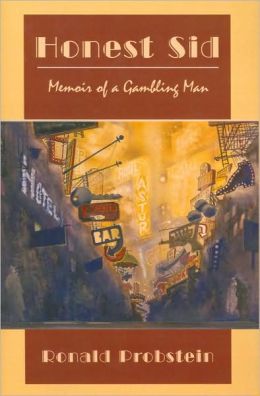
Ronald Probstein – World War I

World War I From Honest Sid

by Ronald Probstein – World War 1

America entered World War I in April 1917 and at the end of the racing season in October Honest Sid decided the season had been so poor because of men going to war and the absence of horses from Europe that he might as well enlist in the Army.  After receiving a modicum of training in Long Island he went to New York City on his first leave, which he decided to extend by a few days and immediately on returning to camp was court-martialed, sentenced to hard labor for one month, and clapped in the guardhouse for being AWOL.  He was released a few days early because his unit, the Rainbow Division, was one of the first American divisions to be sent to France to fight.

When I asked him about the fighting (pp. 31, 32); “He would always side-step my entreaties. He described his first exposure to combat at Baccarat by saying, “It was pretty quiet when we got to the front.  We spent more time sittin’ in the dugouts playin’ cards or ‘readin’ our shirts, which was pickin’ the cooties out of our clothes, than we did fightin’. He never mentioned in this little “quiet war” the occasional massive gas attacks, when mortar shells filled with phosgene, arsenic or mustard gas rained down on the men, killing, blinding, or burning hundreds in minutes, nor did he discuss the artillery barrages which blew men and munitions into the stench-filled air.  And he never talked about the infantry raids that left pieces of bodies hanging from the miles of barbed wire stretched across the trenches on both sides.”

He was in the largest trench battle of the War at Champagne but all I could get him to tell me about were the artillery barrages (p. 33): ”When we started firing it was like the Fourth of July.  What a sight.” I thought I was watching a show, until all of a sudden the Krauts let loose with a shower that made our act look like the opener.  I slid into the nearest hole like it was second base and didn’t see much after that because I kept my head down. It wasn’t so great, kid, since I crapped in my pants.”

“At Champagne, my father sustained a minor wound in his rear end –which, as he told me with the wryest of smiles, “Happened when I got confused on the direction of the German trenches and ran the other way.”

If you’re going to live outside the law, you’d better be honest. This seeming paradox was the operating principle of Sid Probstein’s life. Guileless and endlessly optimistic, he was known as Honest Sid around his stomping ground of New York’s Broadway. Sid wasn’t a tough guy, or even a bad guy. He just never had the patience for the “straight” life, grinding out a living at some monotonous desk job.

He was the quintessential American dreamer, always sure that the good life was just one big score away, a man who never stopped believing in his own good luck, even when the evidence said otherwise. He had all the tools, he was charming, good-looking, quick-witted and decent, but he had an obsession he couldn’t escape.

Honest Sid is the story of an American archetype as seen through the eyes of his son, Ronald, who loved him, and who almost lost him. It follows Sid’s adventures in the world of bookies and bettors, fighters and fixers, players and suckers set against the often-romanticized backdrop of Depression-era New York. It is also the passionate tale of the great and tempestuous love between Sid and his wife Sally, and of his son Ronald whom he idolized.

Buy Now @ Amazon

Genre – Biographies & Memoirs

Rating – PG13

More details about the author & the book

Connect with Prof. Ronald Probstein on Facebook & Twitter

Tuesday, September 24, 2013

Guest Post by George Bernstein - PRACTICAL ADVICE FOR BEGINNING FICTION WRITERS


First, understand how difficult it is to make a living solely as a writer. Few succeed like the J.K. Rowlings and John Greshams, and they struggled for years to even to even get published. Those who make real money writing fiction are about .01% of all the writers out there. That’s 1/100th of ONE PER CENT… one in 10,000!

Second, if you’re still intent on being a writer and getting published by a “REAL” publisher, you’d better have a thick skin. Chances are, you’ll receive rejection… after rejection… after rejection! You may NEVER find an agent or publisher for your work. Louis L’Amore, probably America’s most prolific writer of Westerns, was reputedly rejected 350 times before getting his first story published. I finally got my first novel, Trapped, published (after 22 years and a multitude of rejections) by winning TAG Publishers “Next Great American Novel” contest. Finally (!) someone loved the story, and it’s received over seventy 4 & 5-Star reviews on Amazon and Goodreads, after TWENTY-TWO YEARS or rejections!

So, unless you’re writing for the joy of it… that you really want to get that story down on paper, no matter what… find some better use for your time. But if in the face of all that, you still want to write that novel, then here’s some advice.

First, start by learning the craft. There is a lot more to writing a great novel than putting words on paper… a sad truth that plagues many self-published bombs. Pick up a couple of books on fiction writing. Donald Maass’ “Writing the Breakout Novel,” and Albert Zuckerman’s “Writing the Blockbuster Novel,” are two of a legion of titles available. Zuckerman’s book gives you a complete roadmap, from beginning to end. You can search Amazon or www.ABE.com (good, like-new used books, cheaper) or the library. While you’re at it, you should pick up Dave King’s “Self-Editing for Fiction Writers,” which you’ll need later. Reading those will get you on the right track.

Now, imagine the story you want to write, think of where it’s going, and the characters who will take it there… and how you want it to end. I write a brief outline, often chapter by chapter, and make up 4 x 6 cards for each major character. Those cards should show each character’s physical appearance (eye color, hair, nose, height, build, distinguishing features, etc.), and who they are (personality), and a list of their various interests. The more complete you make these, the more “alive” your characters will become, people your readership can connect with. They must laugh, and suffer, and have loveable (or hateful) quirks.  And if while fleshing out your story, you add something to the character, add it to their card. You don’t want a blue-eyed gal to have “emerald” eyes later. Believe me, it happens.

Time to begin writing. Everyone does this differently. Personally, I’ll write the entire story before I do much editing. I don’t worry about spelling, punctuation or grammar while I’m getting my story down. I try to get emotionally involved with my protagonist, and let the players  take over the plot. Each of my four novels changed substantially from my original outline as I wrote. In collaboration with my editor at TAG, Dee Burks, I made substantial revisions to much of the end of Trapped, although I preserved the very ending. In A 3rd Time to Die, I added, then removed the Prologue several times before finally deciding to keep it, because it set up the storyline.

The hardest work comes when you’ve finished the first draft. My immediate task is a first pass at correcting obvious mechanical errors: spelling, punctuation, grammar and sentence construction. Then look at the story. Did you create sufficient  tension? Donald Maass asks, “What’s the worst thing that can happen to your characters?” After coming up with that trauma, he asks, “What can be WORSE than that?” Wow! Even worse! Okay, you finally think of something really bad, and then Maass asks, “What’s even WORSE than that?” If there’s no jeopardy…no anxiety…no one will bother reading it. And REAL tension, anxiety, or terror doesn’t happen in a few paragraphs… or even a page or two. A problem many writers have is taking the time to make a bad thing worse… and worse… and worse until it seems hopeless, before finally saving the day.

Okay, now you’ve built lots of tension. Time to read the dialog out loud. Does it sound contrived or natural? Join a critique group where you can read some pages, and listen to other read theirs… and develop a sense of what sounds good. Good dialog requires very few tags. Readers should usually know who is talking, but if you need a tag for clarity, keep it mostly to “he said; she said.” And use contractions. People rarely say “I do not” instead of “don’t”…unless it’s used for emphasis.

Then, go back and find “static” words, replacing them with vibrant words. He “scurried” from the room, not “ran.” She “studied” him, not “looked.” The sun “burst” over the horizon, not “rose.” This is how you punch up your prose, and develop you own “voice.”

Next, review your descriptive areas. It’s important for your readers to have a mental picture of how someone or someplace looks…but don’t over-do it. Some writers spend a half-page describing how a person is dressed. That’s way too much, and takes your readers out of the story. Find the middle ground.

Don’t think one edit or revision will do it, either. I removed a complete side plot from my original version of TRAPPED. It was exciting, but just didn’t add to that story. But it wasn’t a loss. I’m using it in one of my new Al Warner detective novel, so that manuscript starts out already half written. Then there is your final copy edit… or three! I’m constantly amazed that, no matter how many times I reread a manuscript, I still find errors… even after a review by a good copy editor.

In the end, writing the first novel will be a huge learning experience. Few authors get their first novel published. In a sense, I bucked that trend with Trapped, my first novel (after 22 years of pitching it). But then I wrote A 3rd Time to Die and two others, and Trapped is so rewritten from my first draft, it might as well be my 5th…or 6th !
That’s what it takes to succeed.

3rdTime3D-2
Buy Now @ Amazon
Genre - Romantic Suspense 
Rating – PG13
More details about the author & the book
 Connect with George Bernstein on Facebook & Twitter

Sunday, September 15, 2013

Pet Peeve of the Publishing Industry: Reviews by Dakota Madison

When I first started publishing my novels, I realized there would be readers who didn’t like my work. I certainly don’t like everything I read, so it’s only natural, my work would have detractors. What I wasn’t prepared for were readers who were mean and cruel (sometimes bordering on sadistic) in their criticism of me (as an author) and my work. I’d always been taught the Golden Rule: If you can’t say anything nice, don’t say anything at all. Apparently that works everywhere but in book reviews!

I’m not talking about rational and honest criticism. Some of the reviews I appreciated the most were ones that helped to improve my work because they were constructive and fair. I’m talking about people being mean-spirited and nasty just because they can.

Imagine if you walked up to a co-worker in your employment setting and said, “I can’t believe you wore that outfit. It’s the most disgusting thing I’ve even seen anyone wear in my life and I gag whenever I look at you. 

Maybe if you didn’t buy all of your clothes at big box stores, people wouldn’t want to puke every time they looked at you.” Your co-workers would think you were mean, cruel and inappropriate. It’s possible that you’d even be reported to Human Resources and maybe reprimanded (or even fired). Why? Because it’s not okay to treat people that way. Yet, no one bats an eye about treating authors that way. I’ve had readers post absolutely horrible things about me and my books—things that were so mean and cruel, if they were said in another context, they probably could have been labeled harassment. But cruelty is considered acceptable when it’s a book review. Anything goes and authors are supposed to take it and not be offended or take it personally.

 Authors are people, too. We have feelings and they can be hurt. Please remember that before you post your next book review.

Buy Now @ Amazon
Genre - Contemporary Romance
Rating – R
More details about the author & the book
Connect with Dakota Madison on Facebook & Twitter